Overview
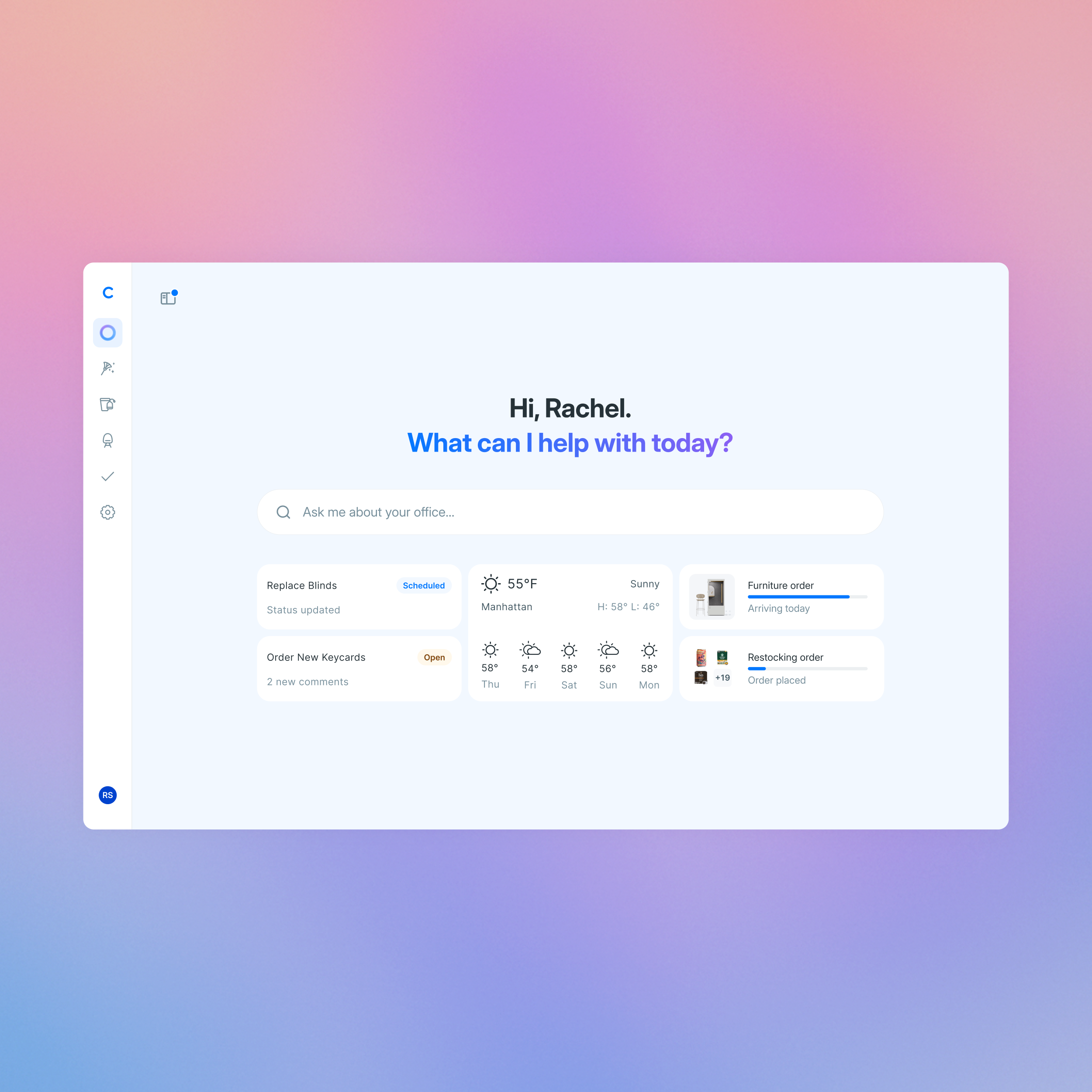
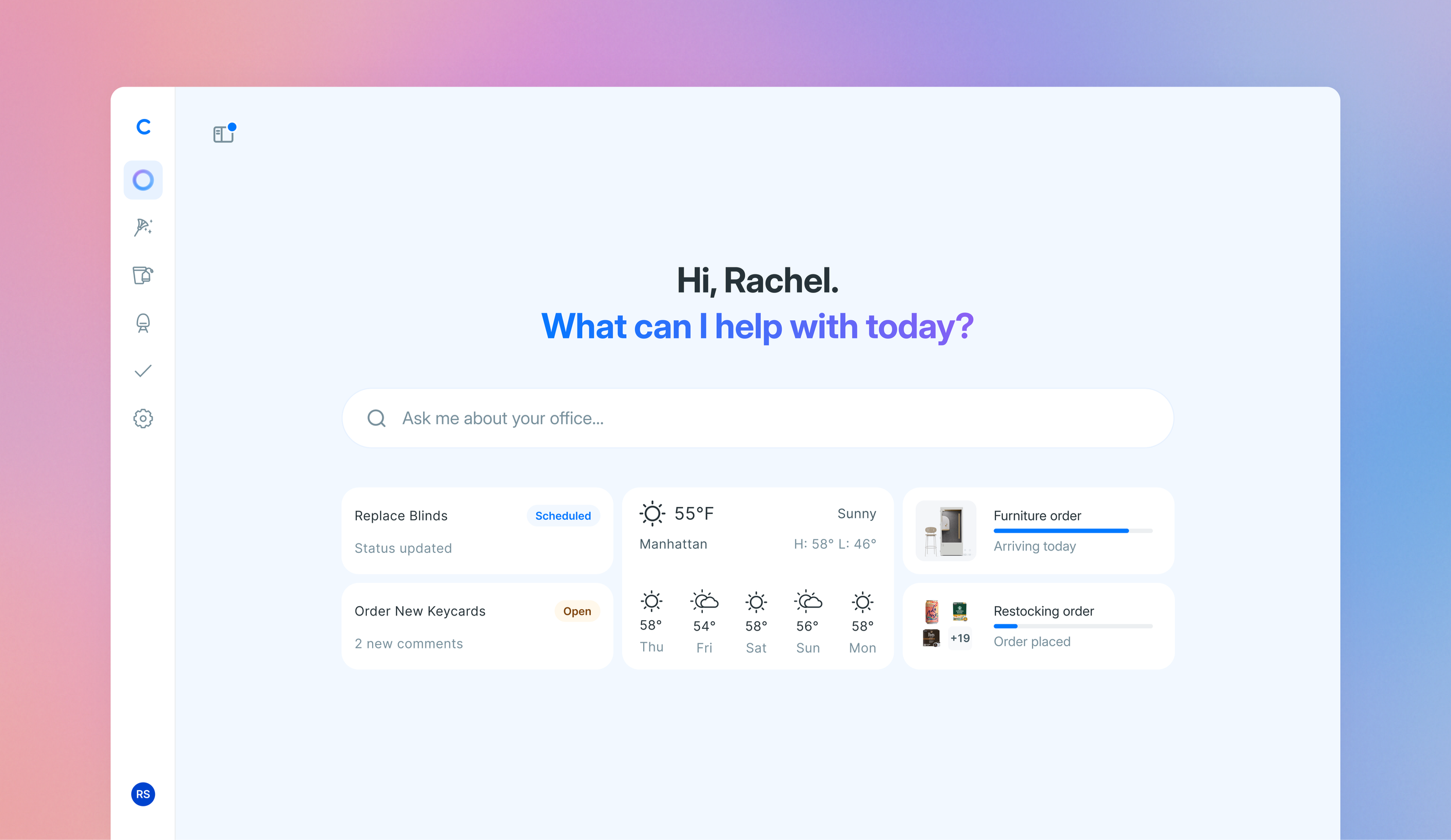
Office management at fast-growing startups often falls on over-extended teams or executives who lack dedicated operational support. In early 2025, Codi pivoted from a full-service provider to a lightweight SaaS platform, giving these teams a centralized, self-serve way to run their physical spaces independently.
Impact
64% of prospects who completed the sign-up wizard converted to paying clients (vs. 20–40% B2B avg)
<2% of support tickets related to service setup or changes
*Data from first cohort of new model clients, Q2 2025.
Team
CEO
VP of Product
Design (Me)
Engineering (CTO + 2 Engineers)
Contribution
Strategic scoping and product definition
Systems architecture
End-to-end UX/UI design
Component system design
Shipped in three months, iterating directly in product alongside engineering
Challenge
Our new users were founders, EAs, and ops leads who hadn't chosen to become office managers. Their ideal state was "set-it-and-forget-it."
My challenge was building that trust fast, while the business model itself was still being defined. I had three months, a design system built for a different product, and a business model that changed mid-build. Their Codi experience needed to feel effortless to set up, simple to check on, cheap to change.
Approach
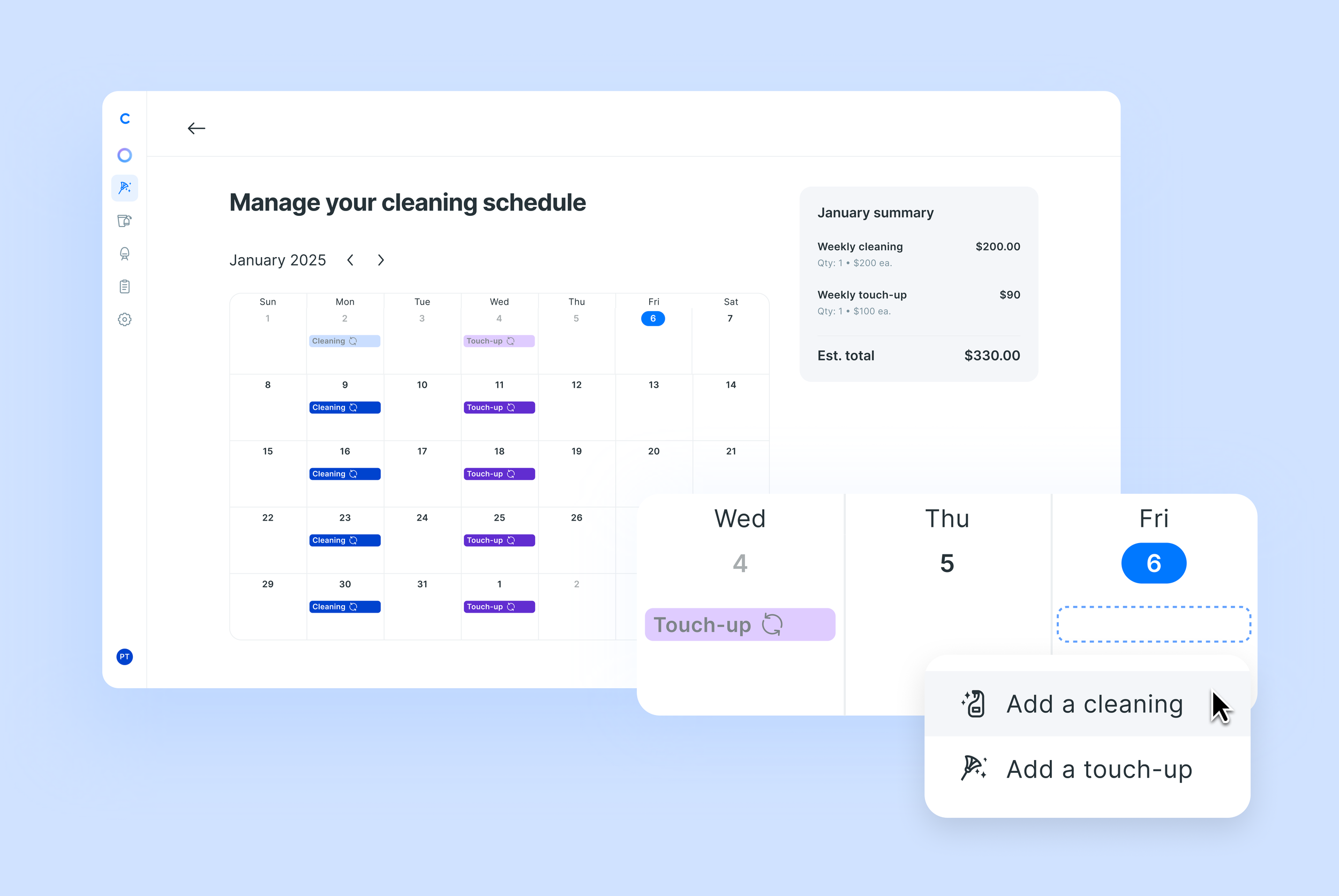
I prioritized getting users to their first active service moment fast. Structurally, I built a shallow, modular framework so users could schedule and modify services independently, while our lean product team could reuse layouts and components as they built each service.
Pre-Launch Decisions
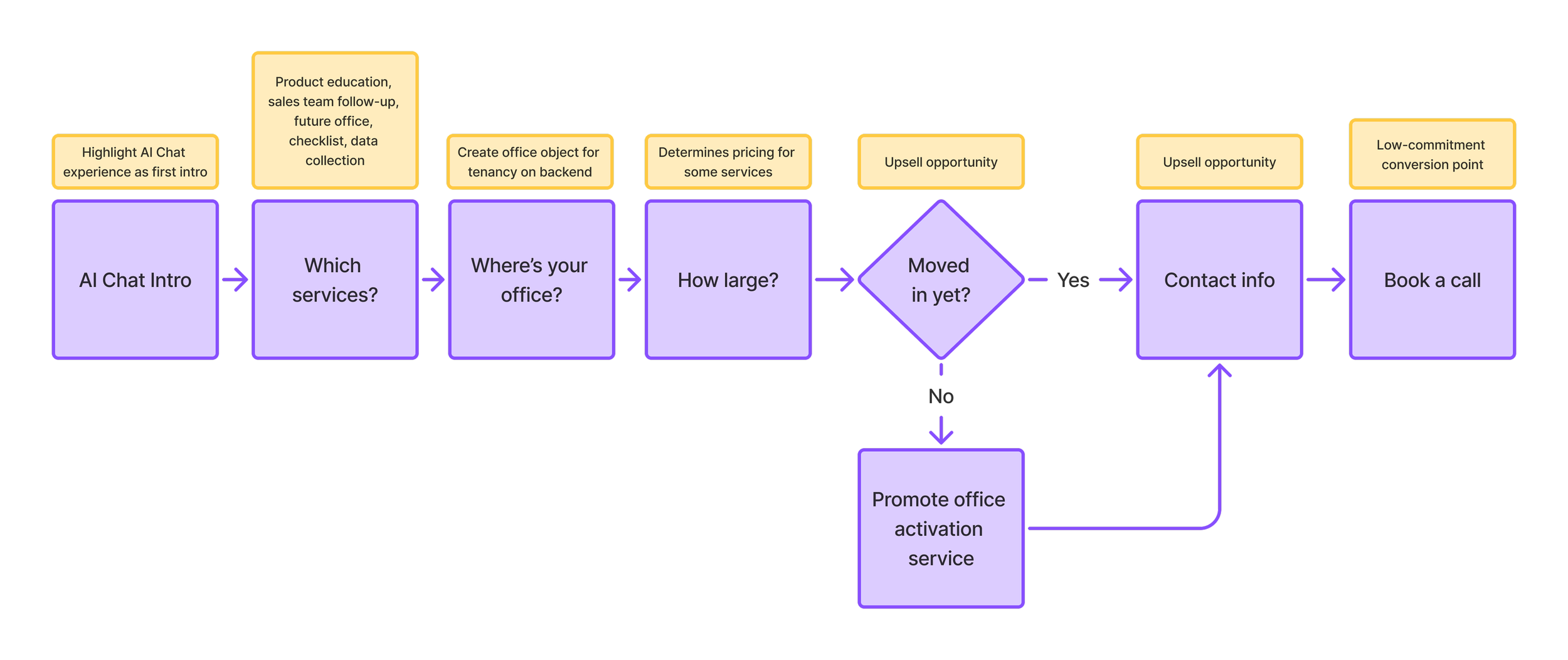
Sign-up: a lightweight wizard, not a doc-upload form
I replaced a heavy data-collection form with a lightweight wizard ending in a call booking. This minimized friction for prospects, captured intent data for sales, and validated feature demand before engineering spent time building.
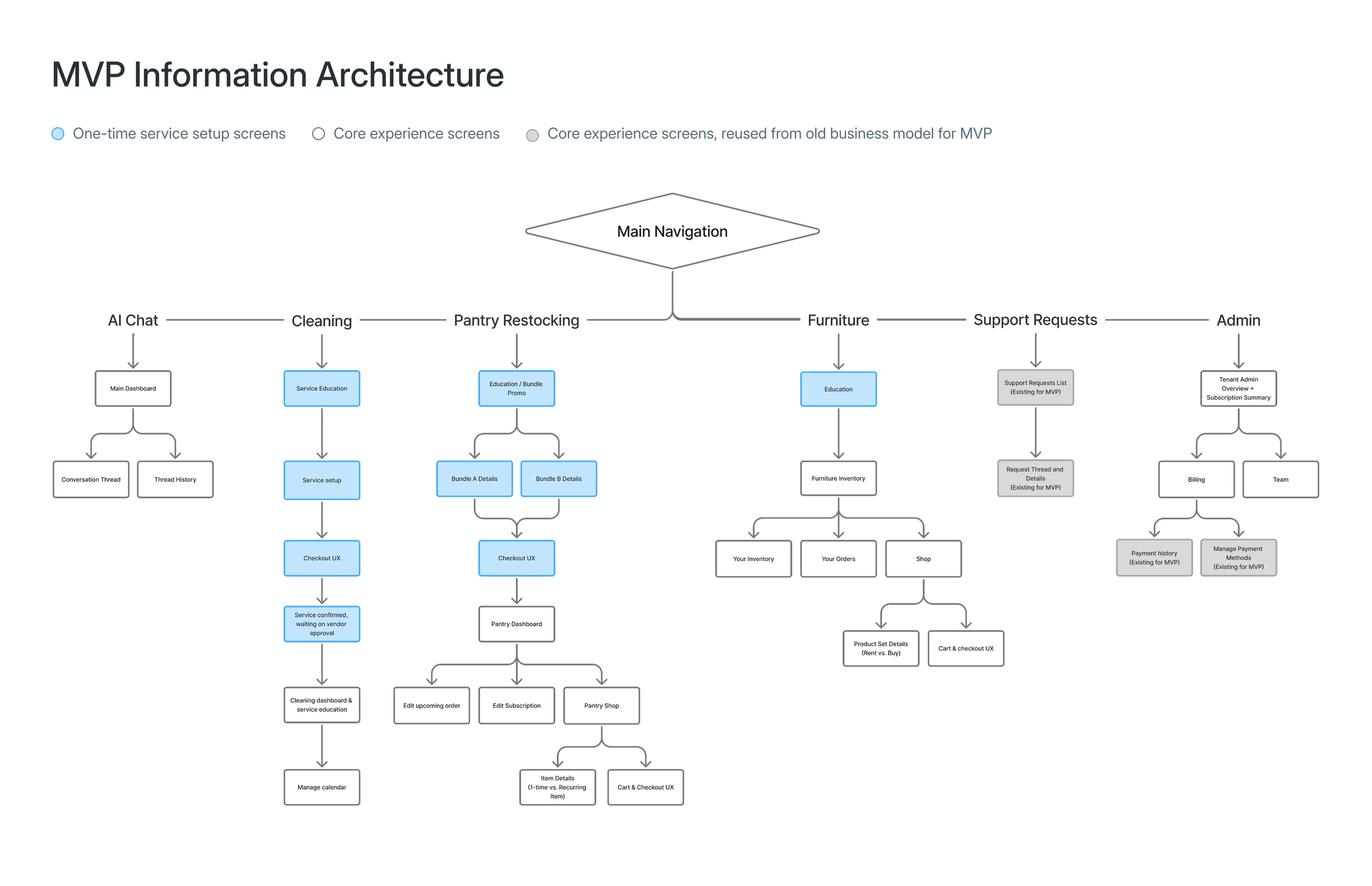
IA and systems: built for flexibility, not just familiarity
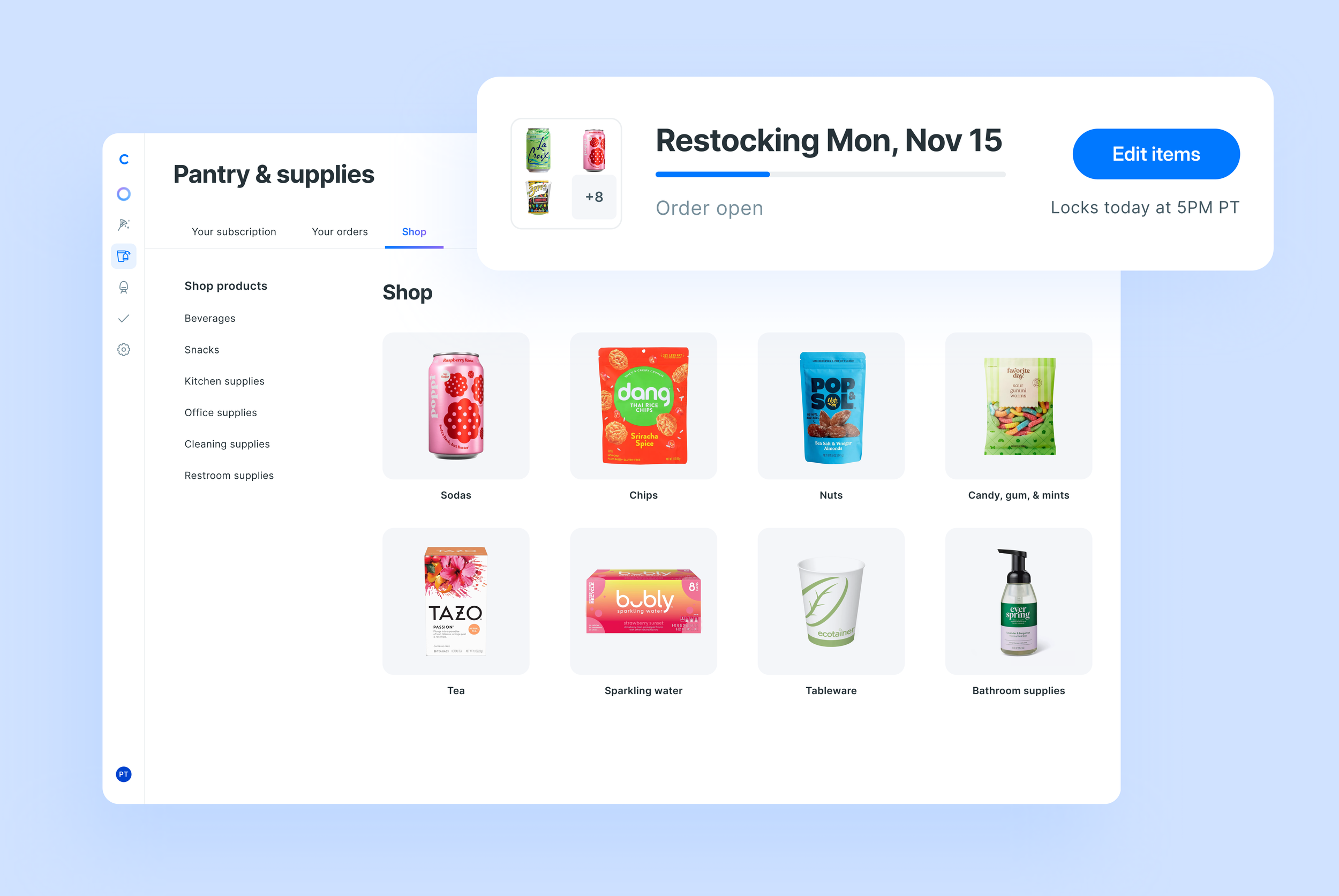
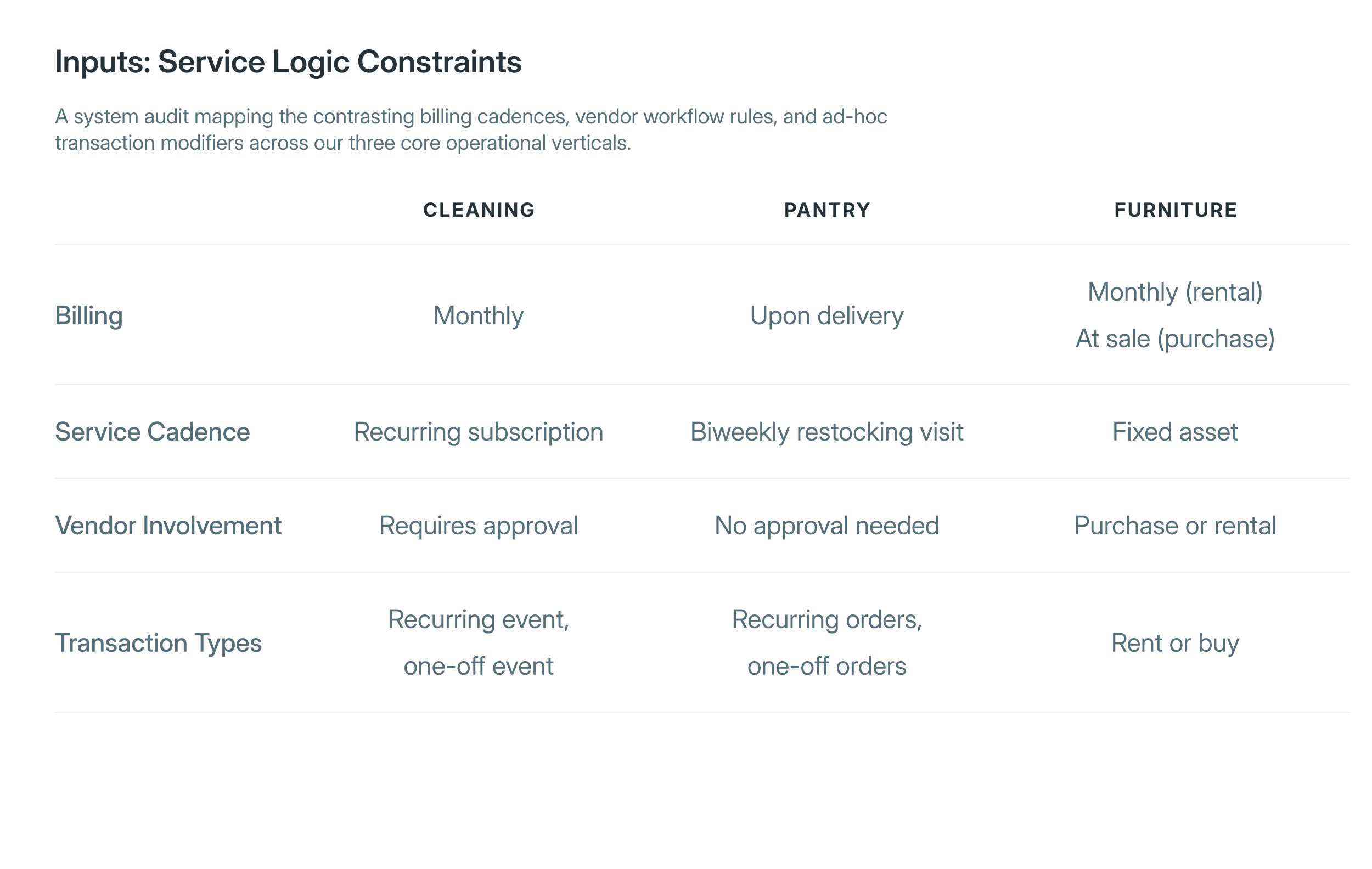
Services were launching one at a time while still evolving. I kept the IA modular, each service its own nav item, so we could ship and change in isolation. The harder problem was that each service had different backend logic, billing rules, and user mental models. I mapped those into a single template framework so the complexity stayed invisible to users and new services could scale without reworking code.
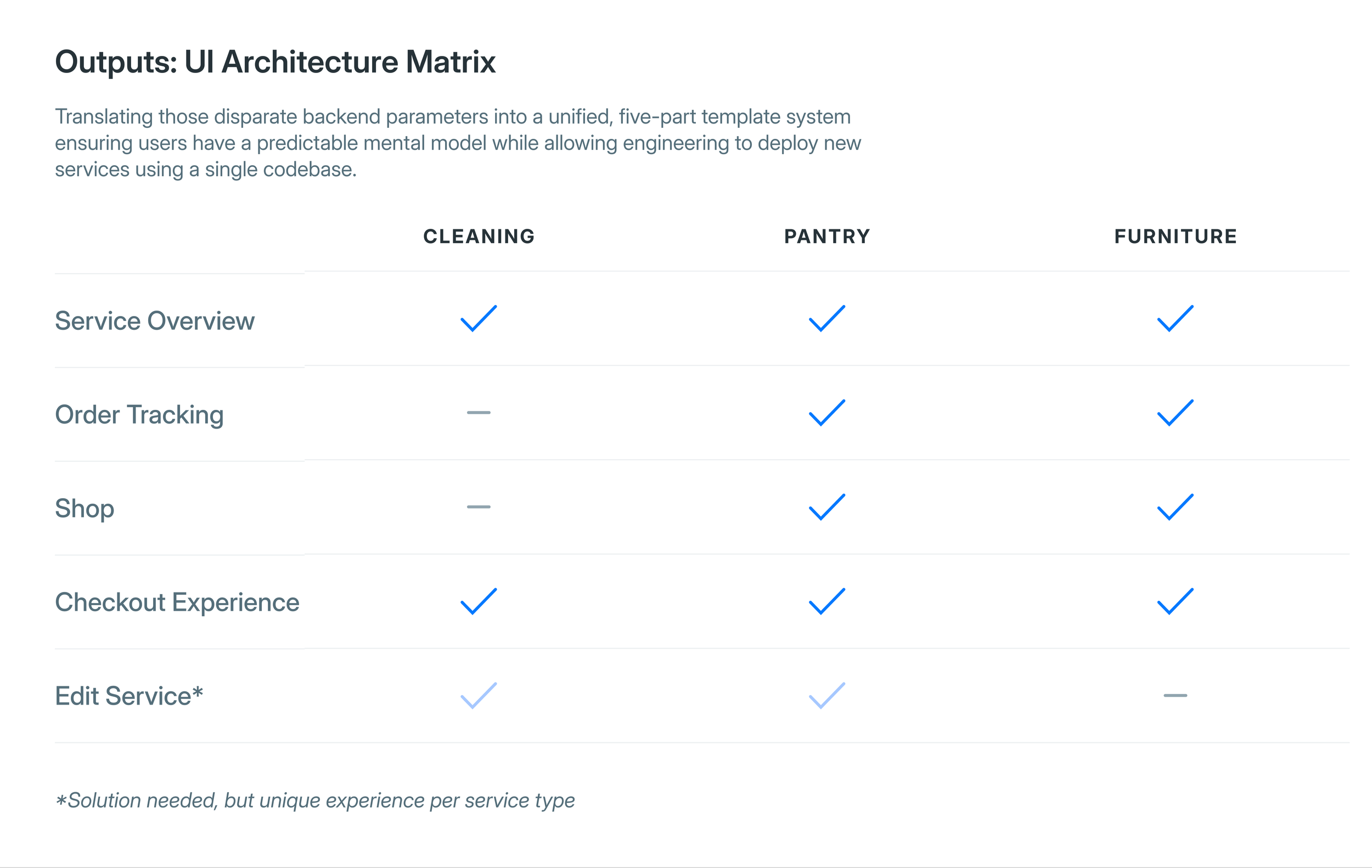
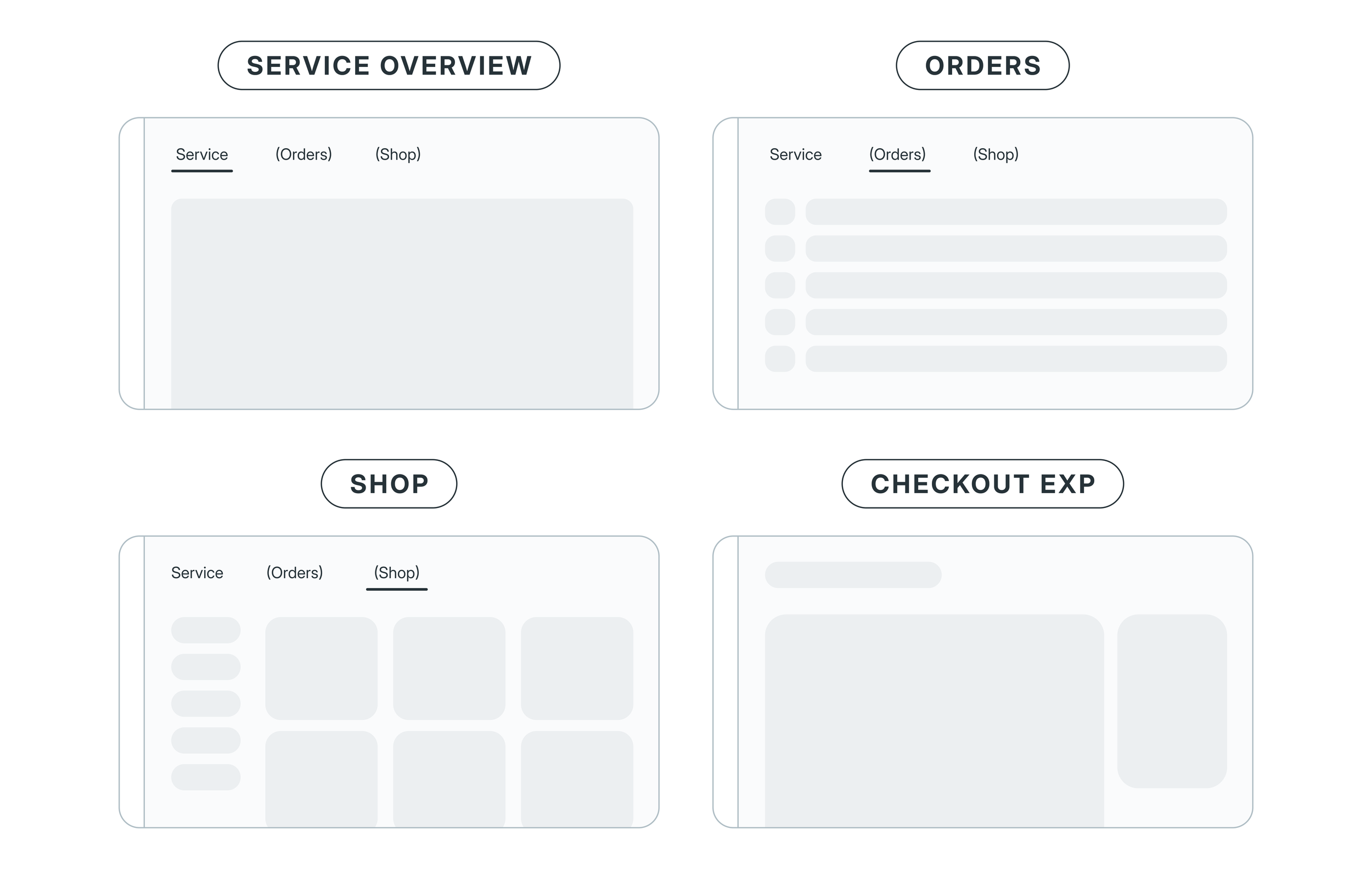
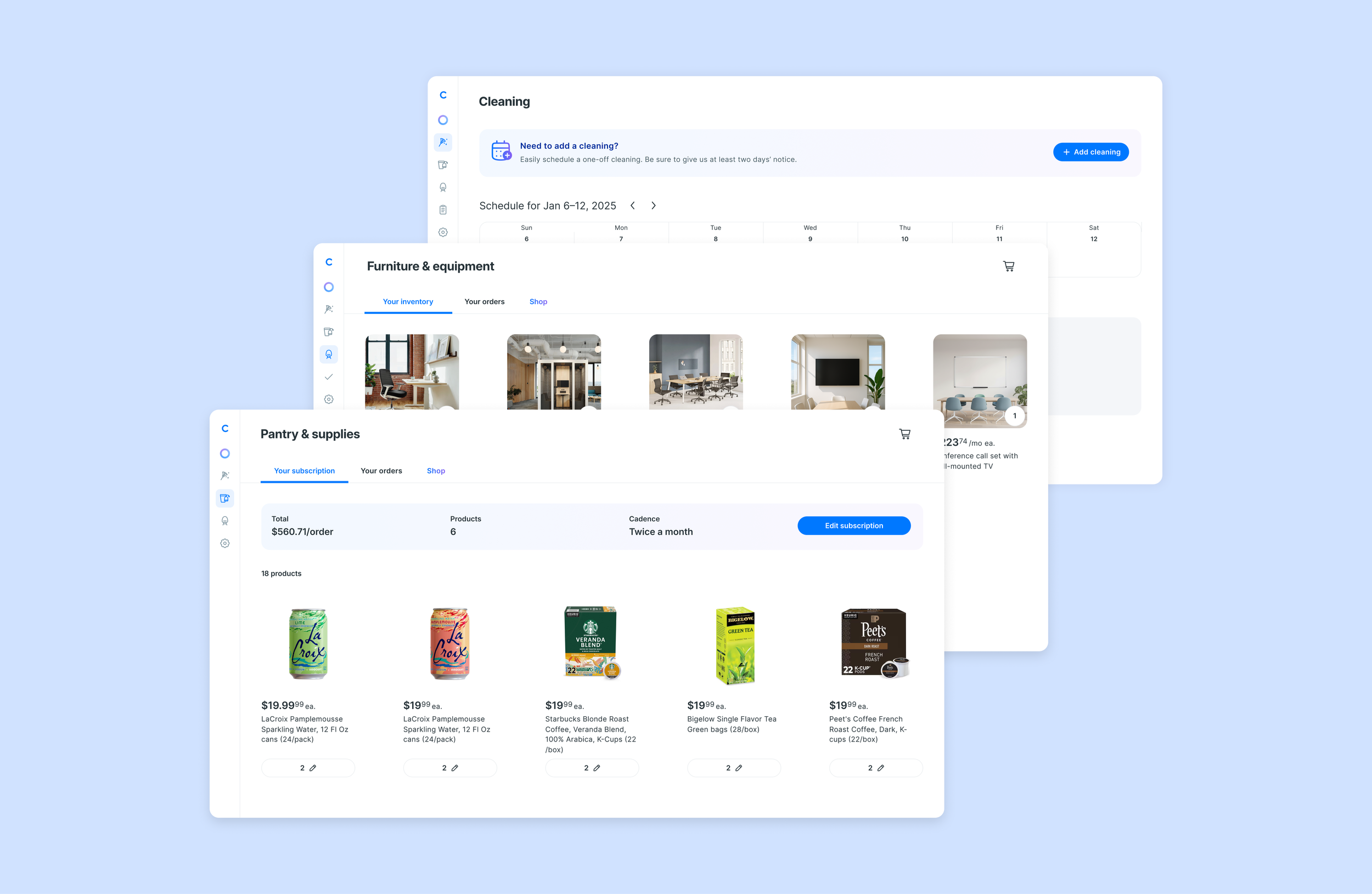
One Pattern, Many Inputs
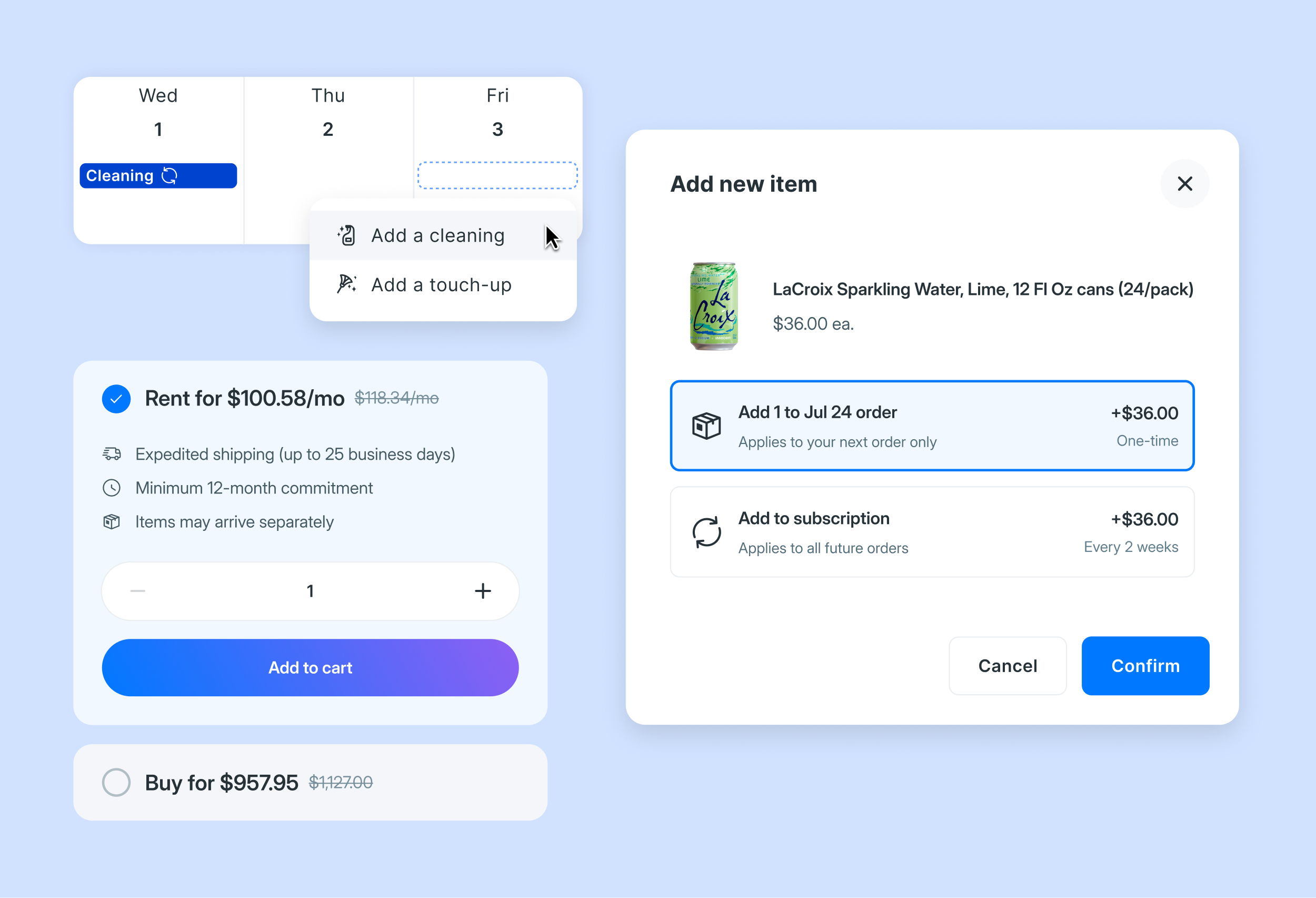
Each service needed different inputs: frequency, commitment type, subitems. I embedded these input into each service based on their user flows. I also designed a flexible checkout card and page layout could be used across our productized services based on what we knew about their workflows.
Outcomes
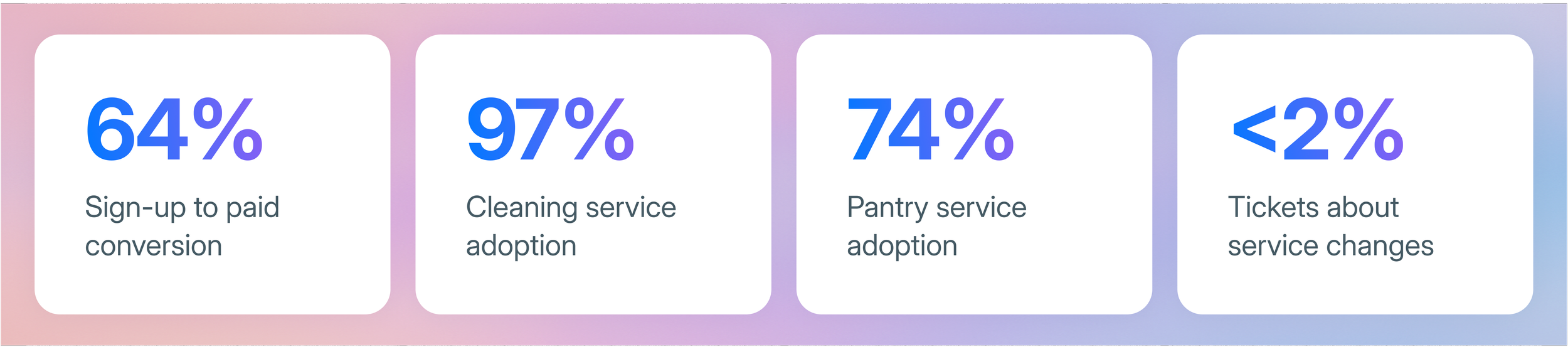
64% converted to paying clients, well above the 20-40% B2B average.
The sign-up wizard was successful in filtering prospects before they ever spoke to sales. By the time someone got on a call, they had already self-selected in.
Cleaning and pantry were fully optional add-ons, not defaults. For a service like pantry, where the value is invisible until a delivery shows up, that adoption rate suggests the setup flow was building real confidence.
<2% of support tickets were about the product itself.
And with less than 2% of support tickets related to service changes, clients were largely managing services independently without needing help.